

As hundreds of wildfires burn in Canada, parts of the U.S. are seeing thick smog and record high air quality issues caused by smoke from the blazes.
Swaths of Canada’s eastern provinces, Quebec and Ontario, began battling fires over a week ago. So far, more than 9 million acres of land have been burned and over 20,000 people have evacuated, Canadian officials said Wednesday.
Smoke from those fires traveled south to the U.S. this week where it’s affecting the northeast, the Great Lakes, and the mid-Atlantic. Many cities, including New York City, Philadelphia, and Pennsylvania have issued air quality alerts due to the smoke and taken measures like canceling outdoor school activities.
Hundreds of miles away from the fires, in one of the smokiest areas, Syracuse’s air quality readings indicated the air was “hazardous.” The New York City skyline has turned a dark, orange hue that people liken to Mars, and pedestrians complain of a strong cigar-like smell. The governor’s office notes that after monitoring the smoke threat for last week, it became significantly worse over Tuesday and Wednesday.
Here’s what to know about the smoke:
Why smoke can travel so far
Tom Kines, a senior meteorologist at AccuWeather, explains that the smoke people are seeing was able to spread all the way from Canada because of how copious and ongoing the fires are. “These fires are still burning up there. They’re still putting smoke into the sky, and as long as you have a source of smoke it’s going to be an issue,” Kines says. Eastern Canada’s wildfires have been exacerbated by extremely dry conditions and warm temperatures. Over 200 fires deemed out of control were still burning in Canada as of Wednesday afternoon.
Read more: What Wildfire Smoke Does to the Human Body
The smoke’s trajectory follows the wind, which is currently traveling north to south, and as a result, bringing smoke from fires in eastern Canada, towards the U.S. northeast and midwest. “All the smoke that gets deposited up in the air gets caught in the wind flow, and pushed out into the states,” Kines says. “That’s basically what’s been happening over the past day or two.”
Is smoke worse at higher or lower elevations?
Kines says that smoke levels are generally greater in high-elevation areas than low ones, but not always. “Usually when you get smoke it’s higher up in the atmosphere and it comes across as haze,” he says. “But in this particular instance, there’s so much smoke, it’s close to the ground. And not only is it reducing visibility, it’s causing air quality issues, and also you can smell the smoke.”
Smog had already been plaguing the northeastern U.S. from late May fires in Nova Scotia when the latest round of smoke came. Although the current fires in central Canada are much stronger, the compounding smoke influx contributed to straining air quality throughout both countries.
How long will the smoke last?
U.S. weather officials warn that high smoke levels in the regions that are already being affected are expected to persist over the next few days. Forecasts show winds carrying the smog will continue to blow throughout the weekend, but should subside around Sunday night. The smoke isn’t expected to travel any further than its current radius.
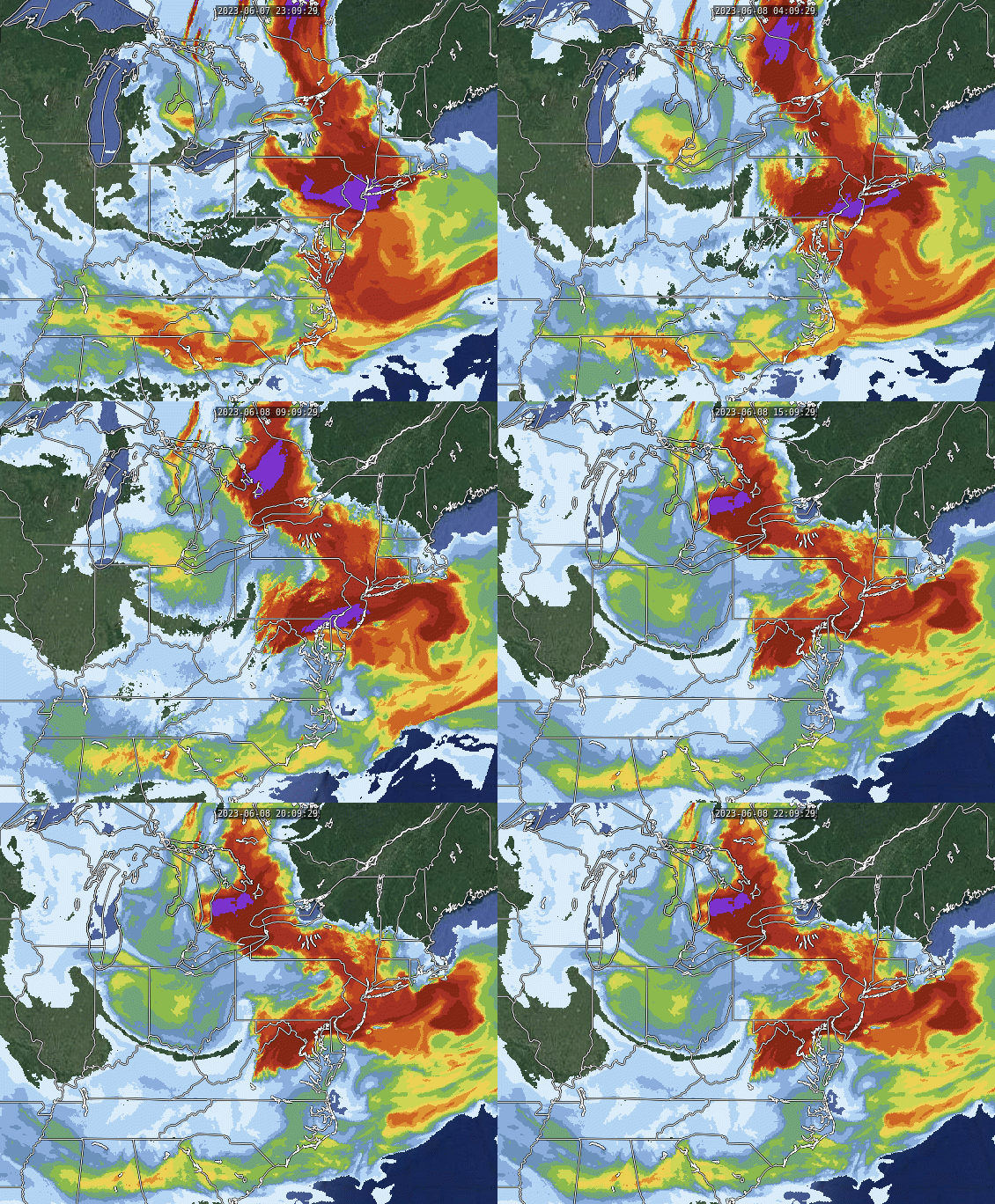
NOAA’s projections of PM2.5 pollution levels starting at approximately 4:15 p.m. on June 7 to approximately 2 p.m. on June 8, both eastern time.
A storm moving from the west towards eastern North America is also predicted to shift wind patterns and stop the smoke from spreading by the end of the weekend. Scattered showers over the next several days in eastern Canada may also help put out some of the blazes. Rain is also expected throughout the northeastern U.S., but research is mixed on if rain truly helps reduce air pollution.
Read more: Even As Smoke Engulfs Us, We Can’t Wrap Our Heads Around Climate Change
While there are signs of hope, the weather could still change, experts note. “Sometime next week, the winds become more northerly [blowing from north to south] again. If the fires are still burning, we could have more smoke issues again,” Kines says.
More from TIME
Government officials in affected states and counties are urging people to stay indoors as much as possible, especially children, senior citizens, and people with asthma or other lung and heart conditions. “If you can stay indoors, stay indoors. This is detrimental to people’s health,” New York Governor Kathy Hochul warned Wednesday in a statement to the press.
“People need to prepare for this over the long haul,” Hochul added, this is “one of the collateral damages of climate change.”
Contact us at letters@time.com.